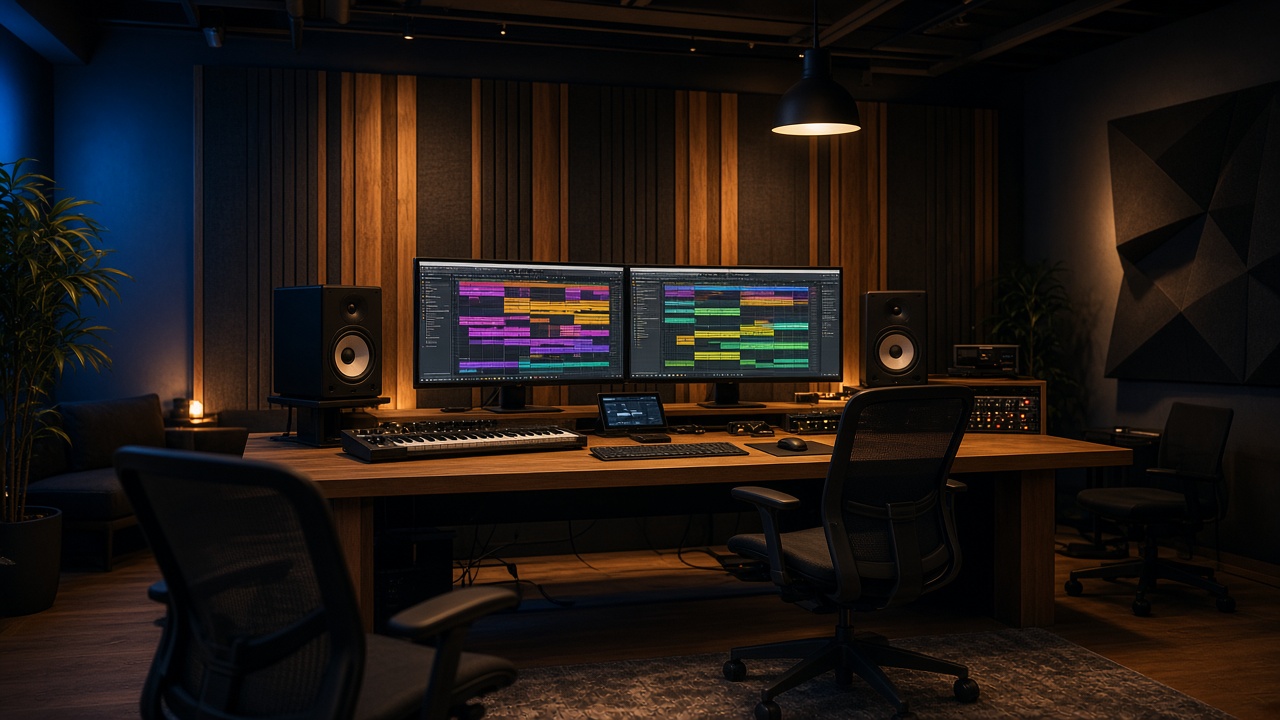
What Cuepoint Studio is (and isn't): a DAW built for people + AI
Cuepoint Studio is a macOS DAW for producers who want realtime collaboration, serious plugins, and an AI coproducer inside the project—not a replace-the-mixer hype cycle.
Search results for “AI music” rarely show a multitrack host. They show browser tabs that turn prompts into stereo files, dashboards that promise instant masters, and mobile apps optimized for sharing loops. Cuepoint Studio comes from a different problem statement: how do working producers and co-writers finish songs inside a real session—with MIDI, buses, third-party instruments, version history, and multiple humans in the room—even when one collaborator is an AI that suggests variations instead of replacing authorship?
This article answers plainly what Cuepoint Studio is, what it is not, and how it fits next to the tools you may already use. No manufactured rankings, no claim to make music without you. Just the product definition serious macOS producers ask for before they install another host.
What Cuepoint Studio is
Cuepoint Studio is a professional AI-native collaborative digital audio workstation for macOS. It runs a local engine on your machine, hosts VST3 and Audio Units plugins, and treats shared sessions—presence, synchronized listening, and permissioned editing—as core infrastructure. An AI coproducer operates inside the project, proposing musically adjacent ideas on tracks you control, with the expectation that humans preview, edit, accept, or reject before ideas become arrangement fact.
It is built for electronic and hybrid production workflows where structure changes quickly, plugin character matters, and remote partners should not depend on endless stem exports to comment on a kick pattern.
What Cuepoint Studio is not
It is not a browser-based song generator where you type a paragraph and download a finished track unrelated to your session. It is not an automated mastering service marketed as a substitute for mix decisions, monitoring, and gain staging. It is not a phone toy disconnected from plugin folders you spent years curating. It does not pretend humans are optional in the credits.
Those products can inspire or supplement; they do not replace a DAW document your team edits bar-by-bar with undo everyone trusts.
Cuepoint is a room for people and machines to work on the same arrangement—not a vending machine for anonymous songs.
The four pillars in practice
Local macOS engine: Monitoring and processing stay on hardware you control, tuned for Apple Silicon-era sessions with dense inserts. Plugins: Your VST3 and AU graph is the sound; AI suggestions route there instead of bypassing it. Collaboration: Shared sessions coordinate transport, roles, and edits without making the inbox the source of truth. AI coproducer: Assistance at the arrangement layer—patterns, harmonies, variations—with preview and granular commit.
Remove any pillar and the product stops matching the producers who asked for Cuepoint in the first place.
How collaboration works conceptually
You invite partners into a live project, not a zip. Presence shows who is listening or editing; permissions protect sensitive lanes like vocals or master buses while leaving drums or synths open. Undo and history account for multiple editors—and for AI actions that should be as revertible as human ones. When networks stumble, rejoin should realign transport instead of spawning mystery duplicates.
That mental model is closer to multiplayer documents in other creative software than to file sync with a chat box.
How AI fits without stealing the song
The coproducer accelerates variation and reduces blank-canvas friction. It should output editable material on instrument tracks, respect locks, and never silently overwrite committed hooks. You keep taste calls: which take, which timbre, which arrangement arc. Partners see machine-assisted changes in context, so credit and judgment stay human-led.
AI in Cuepoint is a third chair with rules—not an opaque ghostwriter.
Who it is for
- Electronic producers co-writing remotely who outgrew stem mail.
- Teams standardizing on macOS and professional plugin formats.
- Songwriters wanting harmonic or rhythmic drafts inside the DAW.
- Producers evaluating hosts where AI and multiplayer are native, not bolted on.
- Artists who still mix and master with intentional workflows—not one-click fantasies.
Who should keep other tools in the stack
Clip-first performers whose identity is tied to a specific live host may still keep that host for stage rigs. Dedicated scoring or audio-post pipelines with niche notation or dubbing requirements may remain specialized. Cuepoint does not ask you to burn down a working live setup; it offers a writing and co-production hub where collaboration and AI matter most.
Use the right tool per phase—performance prep versus shared arrangement hours—without pretending one app must do everything.
Comparisons without straw men
Compared to prompt-to-audio services, Cuepoint keeps structure editable in a multitrack session. Compared to traditional DAWs with export-only collaboration, it prioritizes shared listening and co-editing semantics. Compared to mastering-only clouds, it stays on the production side of the finish line—arrangement, sound design, and mix preparation inside your plugin world.
Evaluations should use your template: load your instruments, invite a partner, run a co-write, then decide.
Learn more and try it
Explore the product story on studio, dive into AI and collaboration pages, browse plugin support, and start with download when you want to validate Cuepoint on your sessions—not on marketing demos.
Getting started expectations
Cuepoint Studio is for producers willing to load real templates, invite real partners, and report rough edges with specificity—not for tourists seeking instant tracks. You should expect rapid iteration on collaboration and AI surfaces, clear communication about what is stable, and a product direction anchored in professional macOS sessions rather than viral clip generation.
Bring your plugin list, your marker conventions, and one song you are not afraid to break. Validation happens when your usual Saturday co-write finishes inside a shared session with fewer exports than last month, not when a demo prompt sounds impressive in isolation.
Questions we hear from experienced producers
Does it replace my entire toolchain? No—Cuepoint focuses on writing, arrangement, sound design, and collaborative iteration inside a DAW document. Mastering houses, live performance hosts, and specialist editors may remain in your stack.
Is AI mandatory? No—but it is native when you want draft variations without leaving the timeline. You can treat it as an occasionally opened panel rather than a constant generator.
Will my licenses travel? Plugin licenses remain yours; Cuepoint hosts them like other professional macOS DAWs. Manifest discipline with partners still applies.
Is this cloud rendering? The engine is local; collaboration coordinates session state—it does not replace your monitoring path with a mystery remote mix.
If those answers match the problems on your desk—editable sessions, human partners, machine assistance with rules—Cuepoint is meant for you. If you only need a one-shot audio file for social clips, a lightweight generator may suffice without installing a DAW.
Feedback from working producers shapes which collaboration and AI surfaces mature first; producers who explain failures in bar numbers, plugin names, and permission expectations help the product stay professional rather than promotional.
That feedback loop is part of what Cuepoint is: a DAW built with producers, not a black box pretending production ended in a prompt field.
Who gets the most from Cuepoint today
Working producers who co-write remotely, who depend on commercial plugins, and who want AI as a copresent editor—not a replacement for arrangement judgment—will find the product direction familiar. Beatmakers who only need one-shot loops may be happier elsewhere; teams who live in shared sessions and detailed MIDI edits are the north star.
Cuepoint is intentionally narrow in ambition and wide in depth: one serious macOS engine, collaboration that respects plugins, and AI that meets you inside the timeline you already defend.
KEEP READING
You might also like
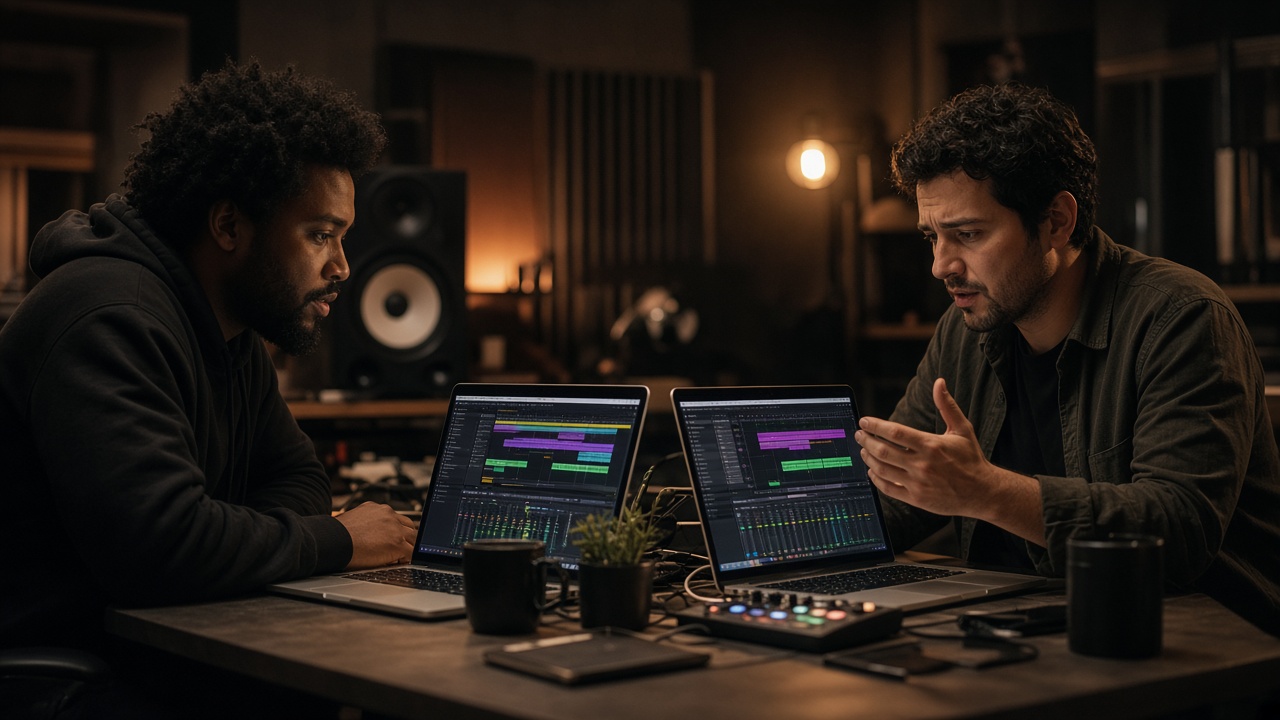
Best ways to collaborate on music in real time ↗
Stop sending project files back and forth. Here’s how shared sessions, presence, and version history change remote production.
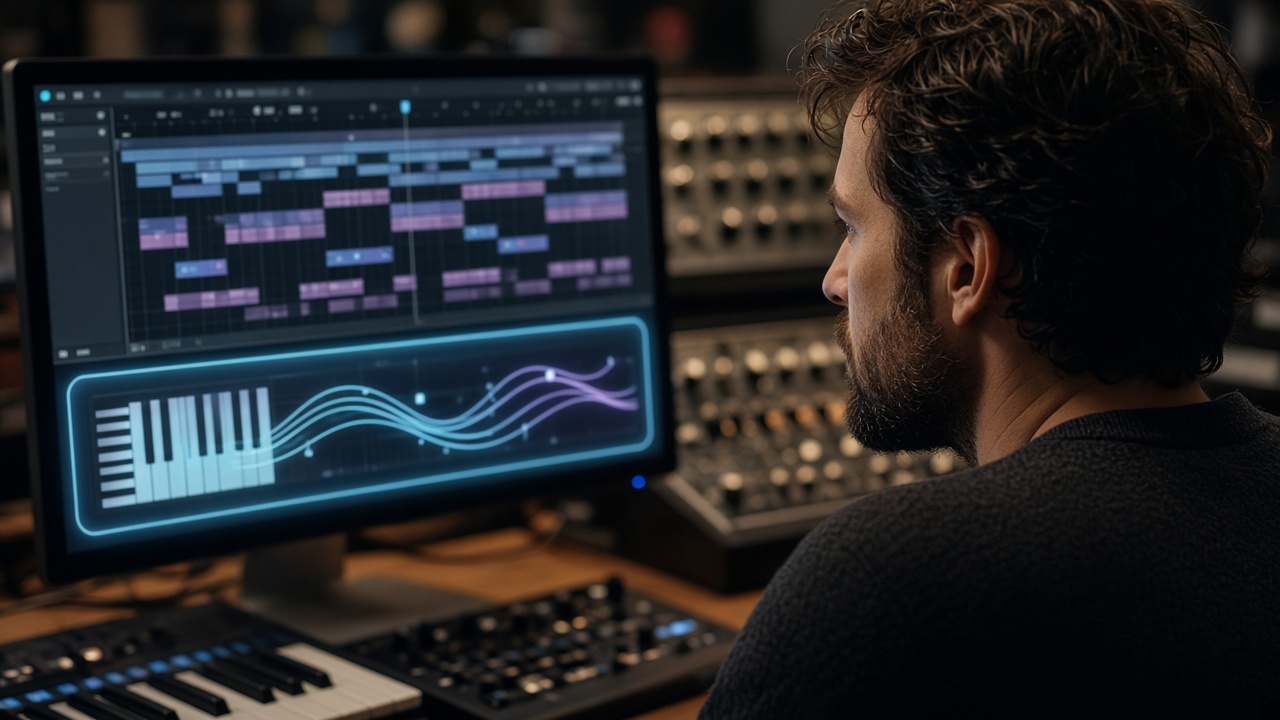
AI music tools vs an AI coproducer inside your DAW ↗
Prompt-only generators finish a file. An in-session coproducer works on your tracks, MIDI, and plugins.
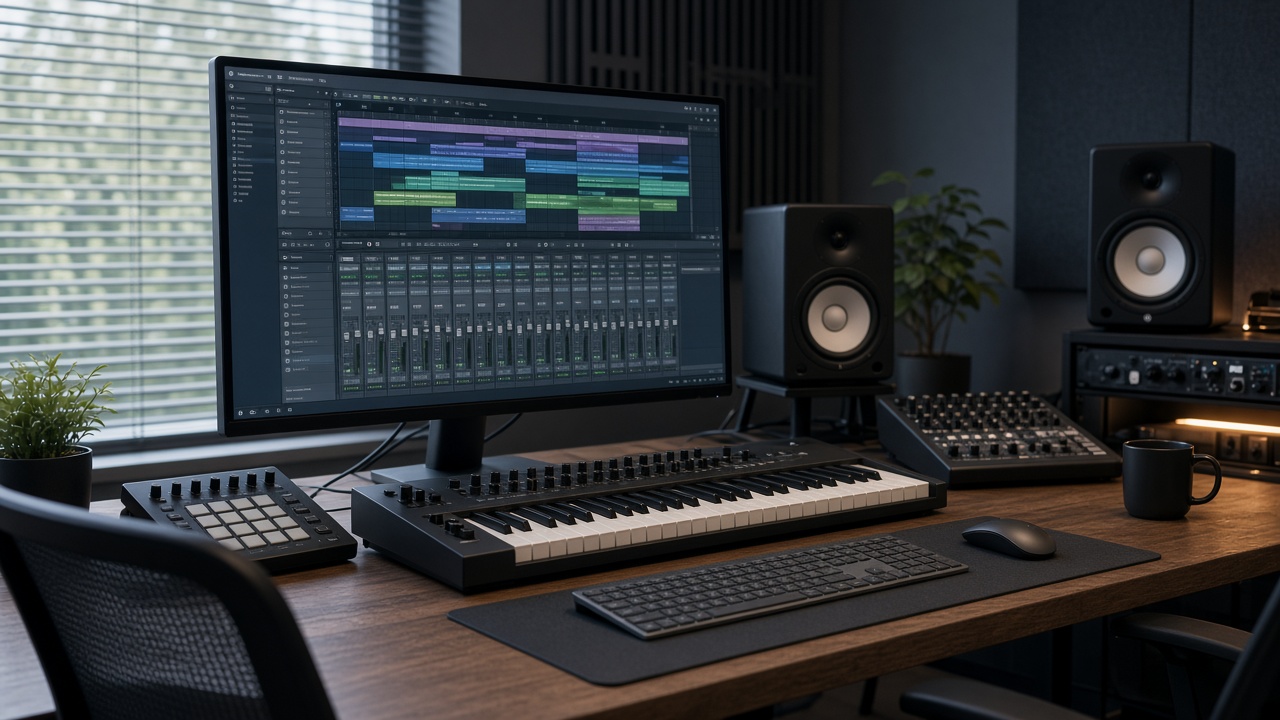
Ableton Live alternatives for AI and collaboration ↗
What to look for if you need a serious DAW plus AI assistance and realtime collab—not just another Live clone.